Data Portal
Data Portal
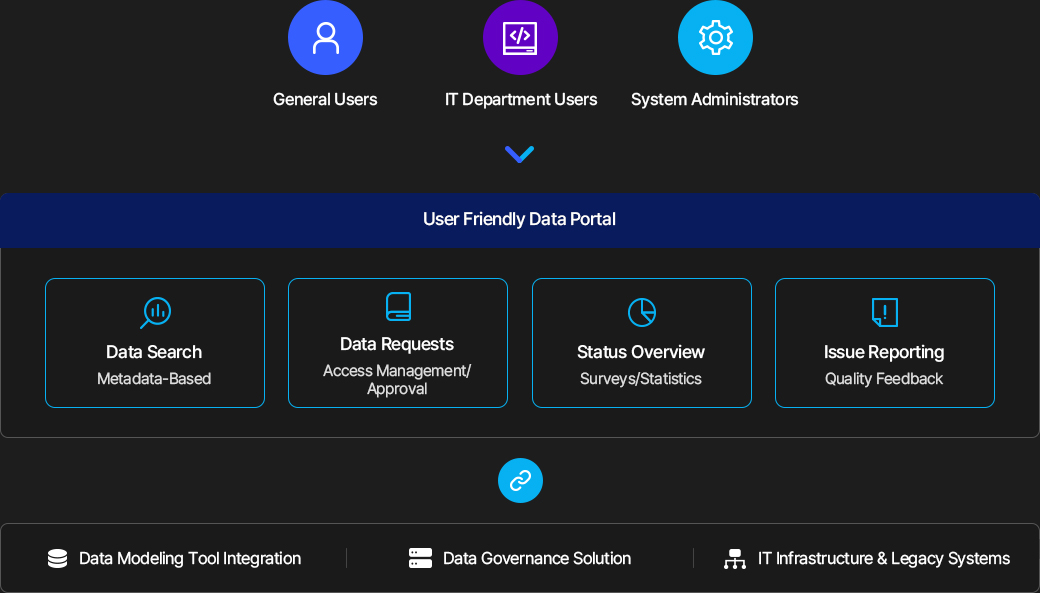
Build a standardized, high-quality data portal based on governance to maximize enterprise data use.
Provide a user-friendly environment where both IT and business users can search, request, and use data.
-
Intuitive, User-Centered
Search & AccessProvide advanced search and personalized data catalogs
so anyone can quickly find the information they need.
Give administrators data asset visibility and business users easy access through business terms,
improving data literacy and speeding data use. -
Governance-Based
Standard Data DeliveryDeliver cleansed and validated standard data under governance principles
to ensure consistent, trusted use.
Use enterprise standard terms and quality data to prevent interpretation errors
and enable immediate analysis and decision-making. -
Efficient Management
Through Connected ToolsConnect modeling tools and core solutions with IT infrastructure
for integrated management from design to operations.
Automate metadata collection and synchronization to shorten implementation,
reduce manual effort, and create scalable data operations.



Intelligent Data Portals & Governance-Based Data Supply
Connect intuitive search with standardized catalogs to improve enterprise data literacy.
Automated integrated management increases data availability and improves decision-making.
- Data Portal Architecture & Use
Data Analysis & Utilization
BI / DW
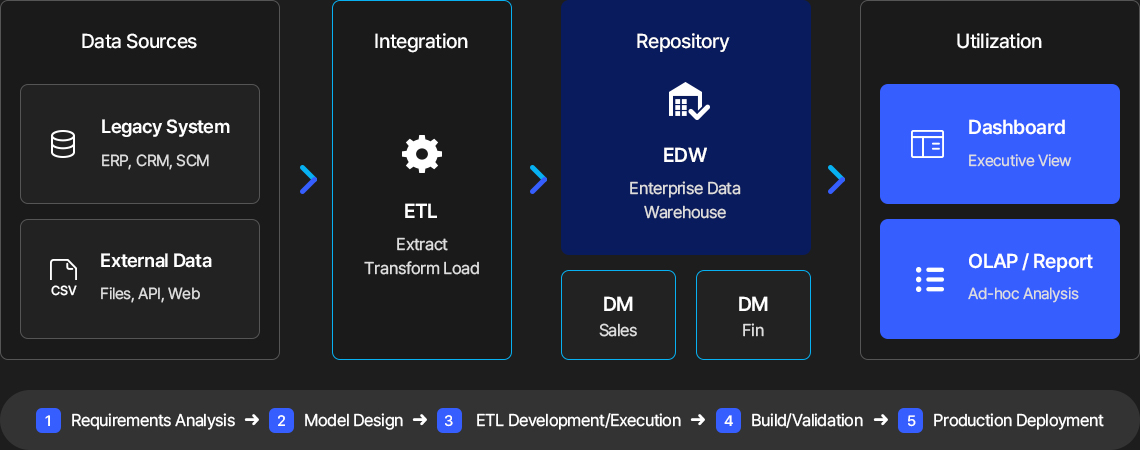
BI/DW services extract, transform, and integrate enterprise data into centralized, large-scale repositories.
They meet analytics needs by user group and deliver trusted data for informed decisions.
-
Centralized Governance for
Enterprise Data AssetsCentralize distributed data to improve management efficiency
and control data asset value.
Remove data silos, reduce duplicate management costs,
and strengthen security and integrity for safe, efficient data use. -
Unified Source Data
Through Integration & StandardizationClean diverse source data to enterprise standards
and integrate it into a single flow.
Automate standardized transformations to ensure alignment
and create a unified data pipeline across systems. -
Tailored Analytics
for Faster Data-Driven DecisionsProvide intuitive, flexible analytics to turn integrated data
into business insights.
Self-service analytics and visual reports improve accessibility
and accelerate decisions with real-time data.



Centralized Governance for Enterprise Data Availability
Unify source data to eliminate silos and provide tailored analytics,
strengthening data security and integrity for real-time, insight-driven decisions.
- BI / DW Implementation Framework
Data Lake
Data Lake
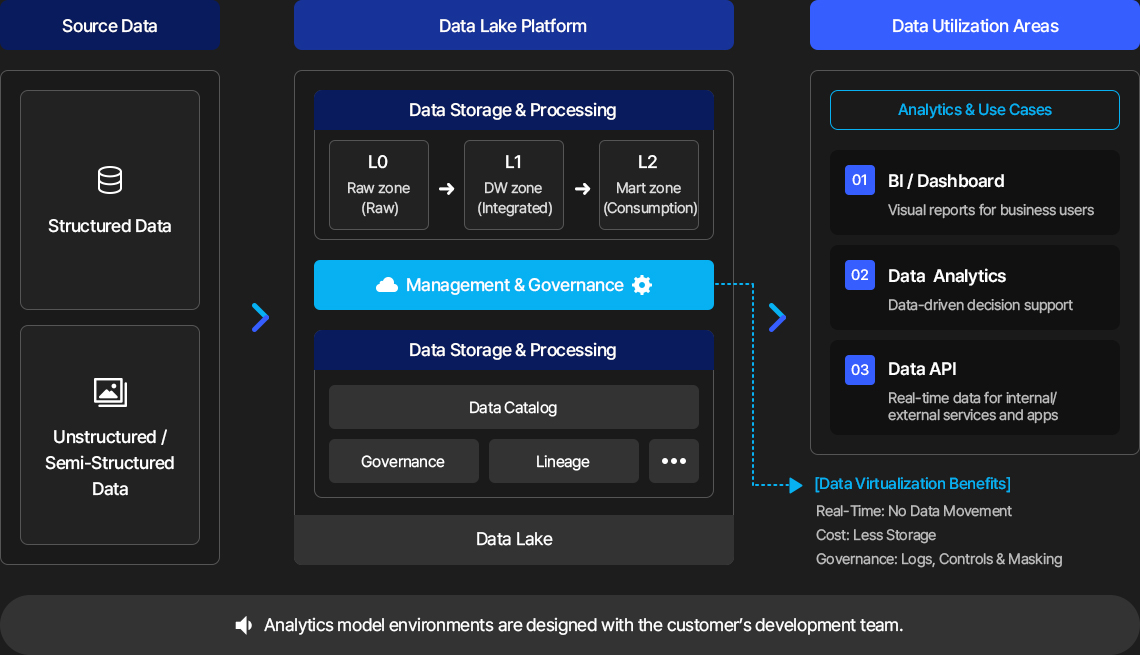
A data lake stores structured and unstructured data in raw form, giving analysts and scientists
a flexible, scalable environment for exploration and advanced models.
-
Unified Repository for Structured
& Unstructured DataBuild an enterprise data lake for numeric data, documents, images, logs,
and more.
Flexible storage removes information silos and combines fragmented data
for multi-dimensional business analysis. -
Optimized Analytics
& AI DevelopmentProvide curated data and environments for analysts and data scientists
to train and deploy machine learning models.
Standardized data processing shortens AI service development
and turns data into intelligent services faster. -
Data Orchestration
for Efficient OperationsDesign and automate pipelines from collection to transformation
and loading.
Orchestration tools improve workflow visibility, reduce waste,
and support stable processing under changing data volumes and loads.



Integrated Data Lakes & Intelligent Orchestration
Build standardized pipelines and optimized analytics on enterprise repositories
to broaden business analysis, shorten AI service lead times, and improve operations.
- Data Lake Architecture
Machine Learning
Machine Learning Analytics Models
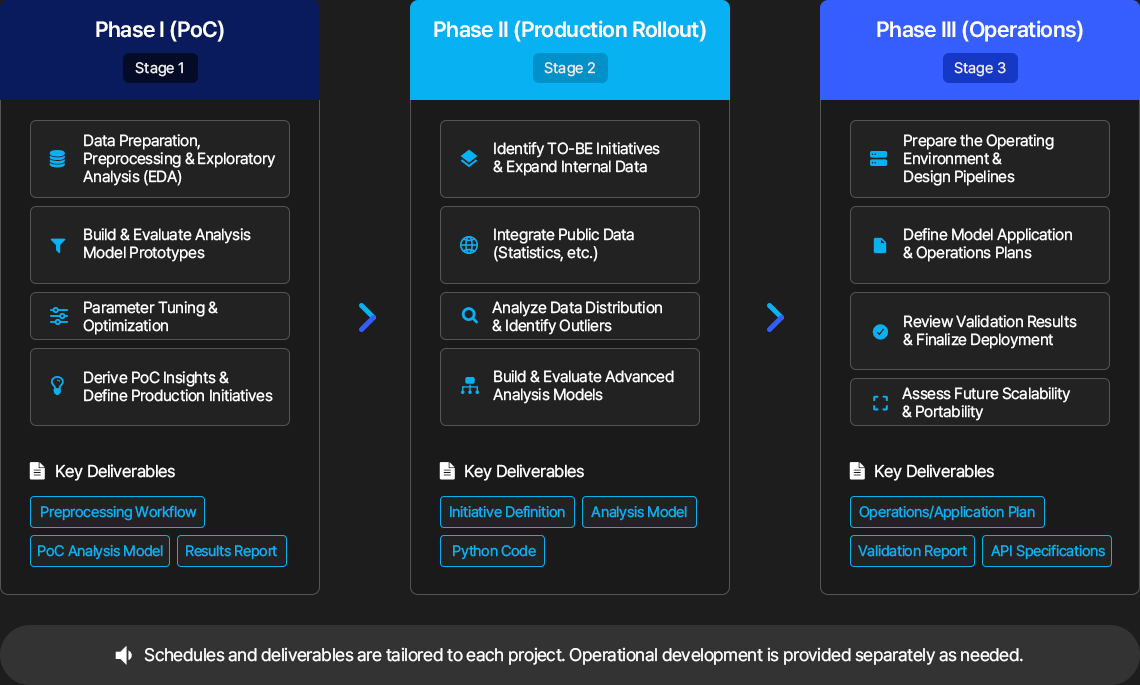
Train organizational data to generate and operationalize insights through prediction, classification, and clustering.
The process spans PoC validation, production rollout, and operations handover.
-
Customer Segmentation
& Demand ForecastingUse machine learning to analyze behavior and purchase history
for precise customer targeting.
Combine time-series analysis and external variables to improve inventory efficiency,
respond to market changes, and optimize marketing and revenue. -
Anomaly Detection
& Strategic InsightsAnalyze real-time data streams to detect and manage anomalies,
helping prevent risks such as fraud and system failures.
Reveal hidden correlations and new business opportunities
to support objective decisions, operational stability, and competitiveness. -
Sustainable Intelligent Enterprises
Built on High-Quality Training DataUse encore’s data-cleansing expertise to secure quality training data
and build reliable AI and intelligent operations systems.
MLOps enables continuous feedback and retraining,
creating business intelligence that evolves with changing market needs.



Intelligent Analytics for Revenue Growth & Risk Reduction
Combine machine learning and real-time streaming analytics for precise targeting and anomaly detection,
delivering strategic insights and stronger business competitiveness.
- machine learning project example
Graph Database
Graph Database
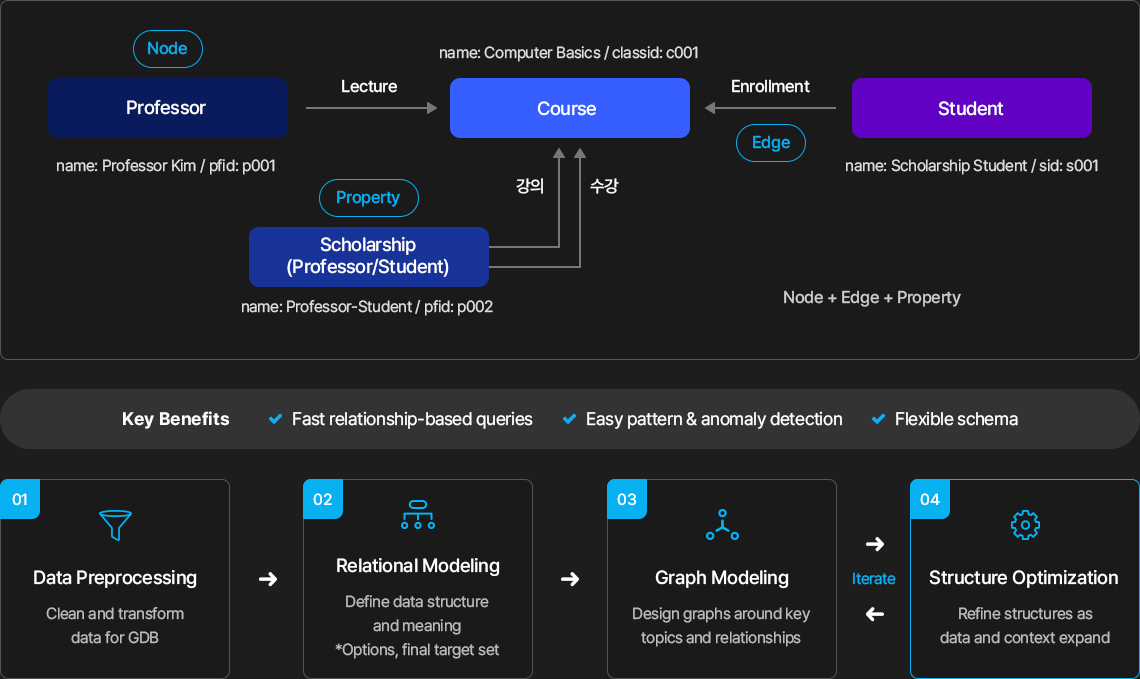
Graph databases model data through entities (nodes), relationships (edges), and properties,
enabling intuitive visualization and rapid analysis of complex connections.
-
Relationship-Centric Data Storage
with Nodes & EdgesModel complex relationships through intuitive node-and-edge structures to manage multidimensional connections beyond conventional tables.
A graph architecture centered on relationships accelerates context-based exploration and reveals hidden data value. -
Intuitive Visualization
of Complex Data RelationshipsVisual dashboards make complex networks
and connections easy to understand at a glance.
They reveal key patterns and nodes that are difficult to identify
through text and numbers alone,
lowering barriers to data analysis and strengthening enterprise-wide data use. -
Intelligent Relationship Analysis
for Business Context & Risk DetectionConnect fragmented data into an integrated network
to analyze causal relationships and interactions in depth.
Predict the impact of data changes, trace hidden clusters and relationship paths,
and enable anomaly detection and precise targeting—supporting more informed strategic decisions.



Relationship-Centric Data Integration
& Intelligent Correlation Analysis with Graph Architecture
Connect business entities through nodes and edges to manage multidimensional relationships and enable intuitive visual analysis.
Reveal hidden data value and strengthen strategic decision-making.
- Graph Database Modeling & Implementation Process