Data Model Currentization
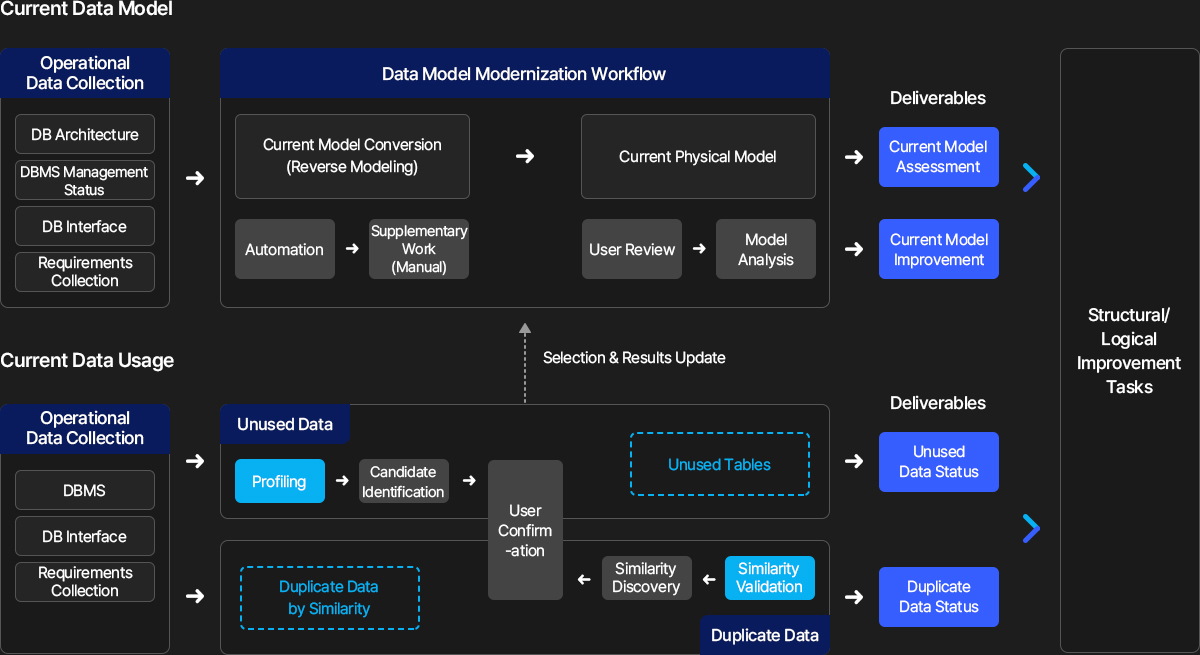
Data model modernization
Data model modernization reverse-engineers live database structures
into up-to-date ERDs that reflect active tables and columns.
It lays the foundation for successful next-generation systems.
-
Full Alignment Between Live Databases
and Data ModelsCompare live databases with design models to remove structural gaps and ensure alignment.
Improve architecture visibility, prevent data errors, and streamline maintenance. -
Trusted Foundation for Next-Generation Systems
Update current data assets to reduce trial and error in new-system projects.
Synchronized models guide To-Be architecture and migration strategy. -
Understand Data Management Through Operational Insight
Assess real system usage to gauge current data management and system maturity.
Identify technical debt and blind spots to set priorities for data innovation.


Aligned Data Architecture for Next-Generation Systems
Data model modernization reverse-engineers live databases into up-to-date ERDs that reflect active tables and columns.
It lays the foundation for successful next-generation systems.
- Data Model Modernization Analysis Improvements
Next-Generation Data Model
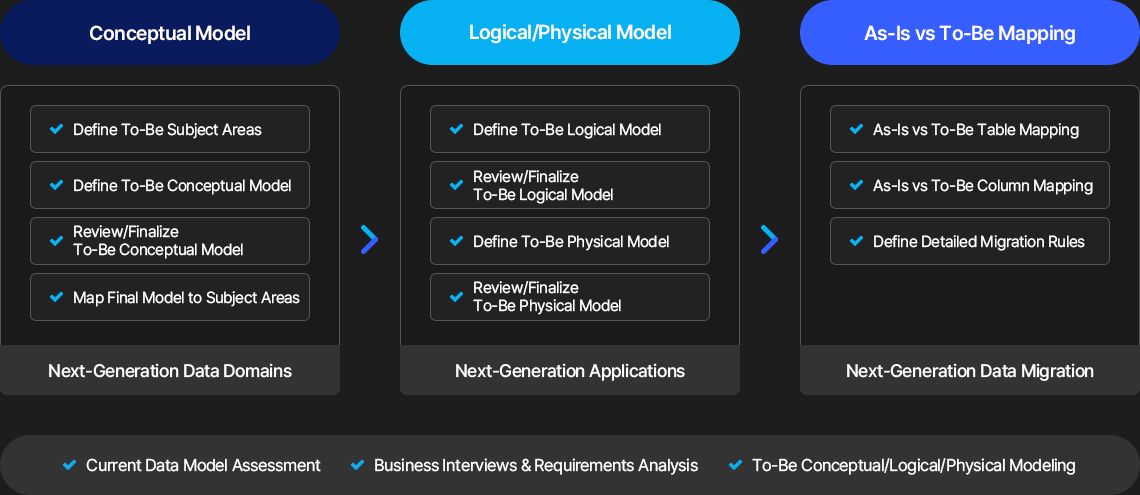
Next-Generation Data Models
Next-generation modeling addresses changing business and technology needs
by overcoming current model limitations and establishing optimized structures.
-
Business Flexibility for Changing Markets
Validate departmental data for consistency and enterprise integrity.
Unify fragmented information to enable standardized collaboration. -
Enterprise Integrity & a Single Source
Manage fragmented data in a unified framework
for a shared, standardized source. -
Trusted, High-Quality Data for Better Decisions
Lifecycle quality management ensures reliable data
for real-time analysis and strategic decisions.



Restoring Data Value for Growth & Decisions
Build an integrated, high-quality data environment
for agile responses to business change and data-driven innovation.
- Next-Generation Data Model Design After Modernization
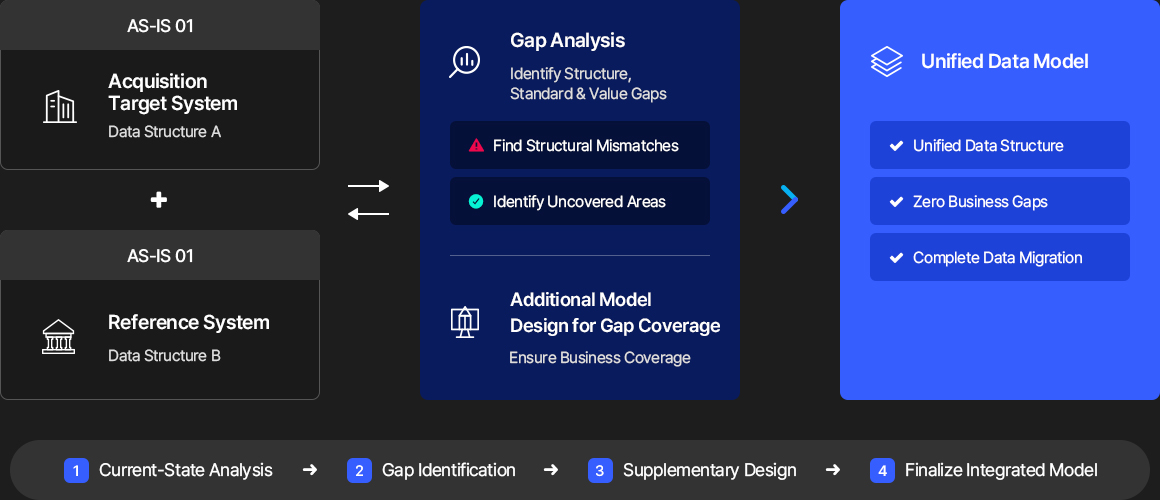
Data Integration Model
Enterprise/System Data Integration Model
Enterprise data integration addresses structural differences from M&A and system integration.
Detailed gap analysis aligns target and reference systems to prevent data loss and business disruption.
-
Enterprise-Scale Data Integration
for M&A and Next-Generation Systems
Integrate complex data across heterogeneous systems
with visibility and a clear roadmap. -
Precise Gap Analysis
for MigrationIdentify model and attribute differences between current and target systems.
Detect structural and business-rule gaps early to reduce migration risk. -
Data Integrity
for Business ContinuityStrict validation prevents information loss.
Map business logic and history to protect core processes and service continuity.


Data Integration for Continuity & Asset Value
Deep gap analysis and business logic mapping remove structural gaps
and ensure data integrity without information loss.
- Data Integration Modeling Process