

META# AI
Wider AI adoption presents a new challenge.
Using unclear data can lead to inaccurate results
and create significant risks for business decisions.
Securing high-quality data is now essential before AI use.
META# AI enables fast, convenient access to AI Ready Data
by automating key data governance processes—data standards and model updates
to significantly reduce time and resources.

AI Ready Data Enablement
Automated data standards and model updates
for faster, more accurate AI Ready Data
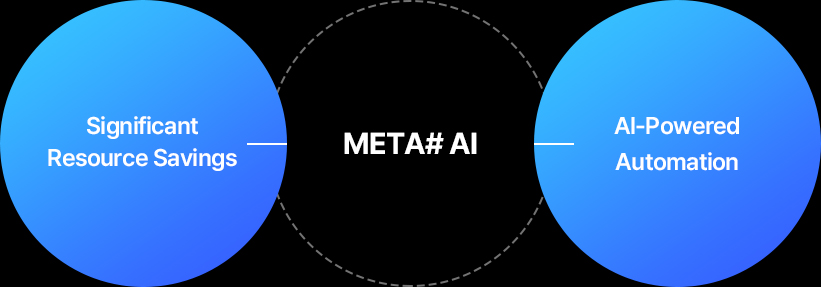
META# AI Core Features
-
01
Metadata Intelligence
Automatically analyzes and structures data meaning.
-
02
Standardization Automation
Automatically generates standard words, domains, and terms, then validates quality..
-
03
Model Modernization
Updates data models based on operational databases and keeps them current.
-
04
Governance Automation
Automates data governance implementation to improve productivity.
AI-Powered Data Governance Automation
-
Step 01
Catalog Collection & Profiling
- Automated DB Catalog collection
- Automated data profiling
-
Step 02
Metadata Generation
- Generate table meanings
- Generate column meanings
- Auto-generate entity definitions
-
Step 03
Standard Dictionary Build
- Generate word dictionaries
- Generate domains
- Generate term dictionaries
-
Step 04
Subject Area Setup
- Map entities
- Define relationships
- Structure business operations
-
Step 05
Model Update
- Integrate with DA# Reverse Engineering
- Automatically standardize data and update models
-
Step 06
Term & Quality
- AI detects non-standard terms and naming issues.
- Improve data quality and consistency
Efficient Data Standardization
Efficient data standardization through visual AI workflow automation
01RAG-Based Knowledge Collection
Using table names, AI generates candidate entity names from business documents, comments, and base dictionaries.
It then defines one entity name and its classification term.
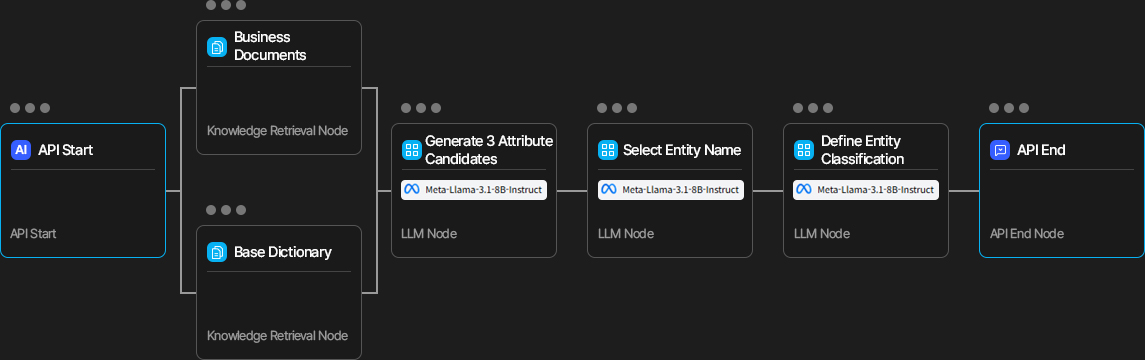
- 01 Customer Service & Support Automation
-
- Uses user-registered business documents, base dictionaries, and DB Catalogs to derive entity names
- 02 Knowledge Organization
-
- Organizes business documents, base dictionaries, and DB Catalogs collected through RAG
- 03 Answer Selection
-
- Derives final attribute names suited to the business domain
- 04 Additional Answer Selection
-
- Defines entity classifications using entity names and profiling or DB Catalog information
02AI Workflow: Korean Column Names
Using column names, AI generates candidate attribute names from business documents, comments, and base dictionaries.
It then defines one attribute name and its classification term using profiling data.
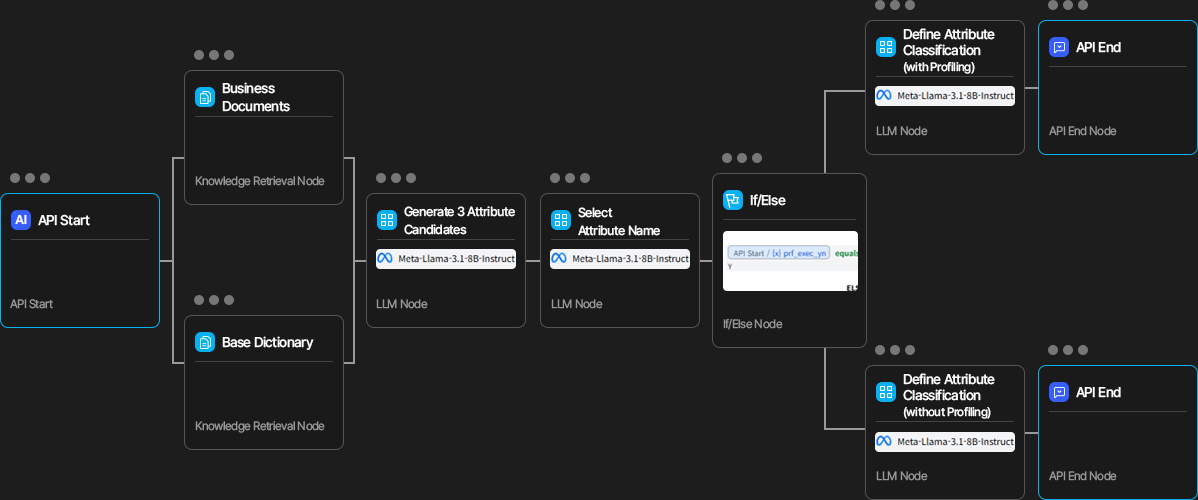
- 01 RAG Knowledge Collection
-
- References business documents, base dictionaries, and DB Catalogs for attribute naming
- 02 Knowledge Organization
-
- Organizes RAG-collected documents, dictionaries, and DB Catalogs
- 03 Answer Selection
-
- Selects final attribute names for the business domain
- 04 Additional Answer Selection
-
- Defines attribute classifications using entity names and profiling or DB Catalog data
03AI Workflow: Non-Standard Terms
After morpheme analysis and candidate dictionary generation, AI defines non-standard terms,
including synonyms and prohibited words, to improve standard dictionary quality.
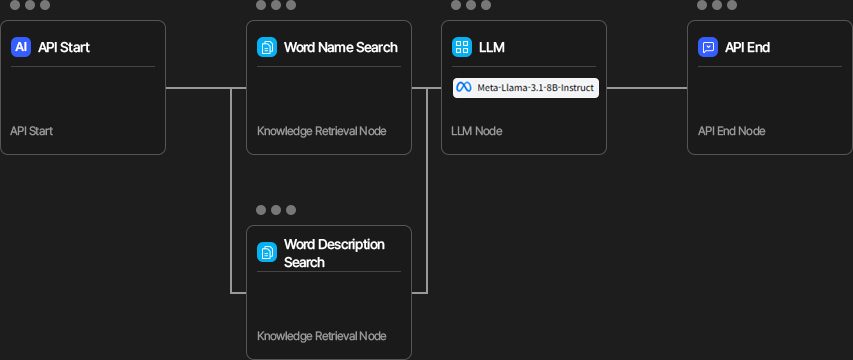
- 01 RAG Knowledge Collection
-
- Derive non-standard terms from candidate dictionaries in the Automation Repository.
- Identify synonyms and prohibited words from semantically similar candidate words.
- 02 Knowledge Organization
-
- Organize RAG-collected documents, base dictionaries, and DB Catalogs.
Clear, High-Quality Data
META# AI reduces data governance processes and resources
to support clearer, high-quality data.
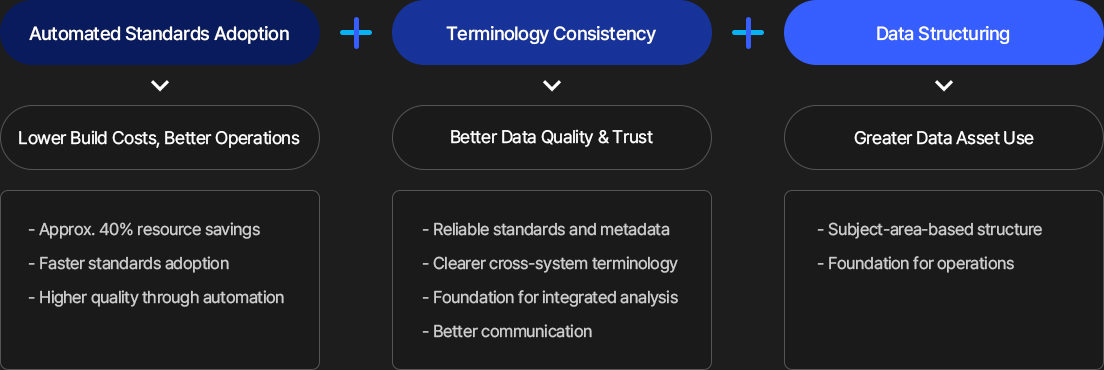
High-Quality Data for AI
-
01
LLM-Based Standardization
Automates standardization and model updates with encore’s expertise.
-
02
High-Efficiency Process 40% Resource Savings
Faster standards adoption and less manual work.
-
03
Scalable for Public & Large Enterprises
Efficient for multi-system organizations and cost-effective for limited teams.
-
04
Seamless META# Integration
Reuses META# metadata to improve accuracy and prevent duplicate work.
-
05
Compatible with Other Metadata Systems
Open APIs and xlsx metadata support interoperability.
-
06
High-Quality Input Data
Covers enterprise metadata for AI training and analysis.
Faster AI Adoption
META# AI Ready Data accelerates AI adoption.
- 01
Better Data Quality
- 02
Higher Operational Efficiency
- 03
Faster AI Adoption
- 04
Business Agility